Why Your Inland Empire SEO Isn’t Working (4 Insights From Real Data)
If your business in the Inland Empire is not getting calls from your website, you are not alone.
We audited our own site the same way we audit clients in Rancho Cucamonga, Ontario, Chino, and Upland. What we found explains why many local SEO strategies fail.
Quick Answer:
Google tests local content with a global audience first, and pages that perform well broadly are more likely to rank in local search results.
Who This Is For
This blog is for:
Service businesses in the Inland Empire
Contractors, consultants, and local providers
Businesses getting traffic but not leads
1. Local content gets stress-tested globally before it ranks locally
Quick Answer:
Google tests local SEO content on a global audience first, and pages that perform well broadly are more likely to rank in local searches.
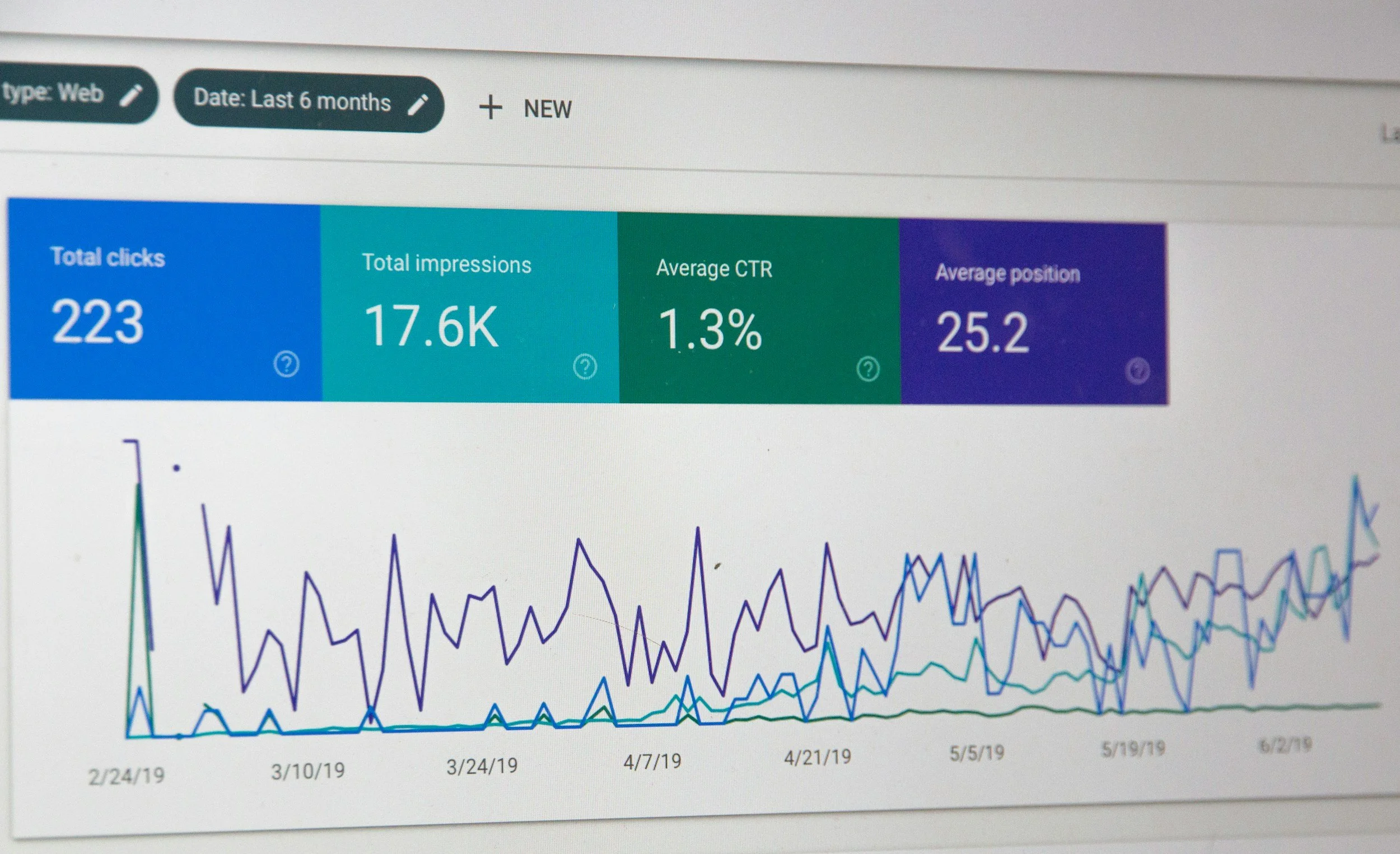
When we analyzed country-level impression data, we saw traffic from more than 100 countries. For a business targeting only Inland Empire cities, this was unexpected.
Data Point
Traffic from 100+ countries
Local content evaluated globally before ranking locally
One working hypothesis is that Google validates the usefulness of content at scale before committing to local rankings. If a page performs well broadly, it gains the trust needed to rank for high-intent searches like “local SEO Rancho Cucamonga” or “marketing agency Upland CA.”
We cannot prove direct causation. But the pattern is consistent.
Most local SEO pages fail because they prioritize location signals over usefulness.
What This Means
Google is not rewarding:
Repeated city names
Thin service pages
It is rewarding:
Clear answers
Real expertise
Content that solves problems
What to Do
Audit one local page on your site
Identify the real question behind the keyword
Rewrite the page to answer that question clearly
If your content is not useful beyond your city, it is unlikely to rank within it.
2. Apple Maps is an untapped channel, and most Inland Empire businesses are invisible on it
Our Apple Maps content page generated 16,678 impressions over three months but captured only 20 clicks because it ranked at an average position of 27. Page 3.
Most local SEO conversations in the Inland Empire focus on Google Business Profile and Google Maps. But a meaningful share of local searches, especially from iPhone users in Chino Hills, Claremont, and Fontana, go through Apple Maps, Siri, and Spotlight search. Few businesses in San Bernardino or Riverside County have optimized for this at all.
If your Apple Maps listing is unclaimed, incomplete, or inconsistent with your Google listing, you are invisible to a segment of searchers that your competitors are also ignoring. That is a first-mover window. It closes once the space gets crowded, and in growing Inland Empire markets it tends to close fast.
You can claim your listing through Apple Business Connect at no cost. It takes about 20 minutes and most local businesses have not done it yet.

3. A fast, well-ranked site can still be invisible to AI search
Quick Answer:
You can rank on Google and still be invisible in AI search if your content is not accessible in raw HTML.
Data Point:
A rating for on-page SEO
A+ performance score
D rating for AI visibility
Our site scored an A on on-page SEO and an A+ on performance. It also scored a D in Generative Engine Optimization, indicating that AI tools like ChatGPT, Gemini, and Perplexity had significant difficulty reading and surfacing our content.
The root issue: Squarespace renders content through JavaScript. AI crawlers primarily read raw HTML and do not execute JS the way a browser does. A meaningful portion of our site's content was effectively invisible to AI-generated answers.
This matters for Inland Empire businesses because AI search is increasingly how people research local service providers before visiting a website. Someone in Ontario searching for the best local SEO agency on ChatGPT or Gemini is getting AI-generated answers. If your site's content cannot be parsed, you will not appear in those answers, regardless of how well you rank on Google.
GEO remains a developing discipline without universal standards, and audit tools use their own scoring methods. But the underlying technical reality is worth knowing, especially if your site is built on a JavaScript-heavy platform like Squarespace or Wix.
What to do: Open your site in a browser, right-click, and select "View Page Source." Search for a sentence or heading you know is on the page. If you cannot find it in the raw source, it is likely being rendered by JavaScript and may be invisible to AI crawlers. That is the gap worth investigating, either with a developer or with a GEO-focused audit.
4. Tablet users convert at nearly 4x the rate of desktop, and almost no one optimizes for them
On our site, tablet users clicked through at nearly four times the rate of desktop users. Position explains part of it. We happen to rank on page 1 for tablet queries, where we are buried on page 2 for desktop and mobile. That is partly a coincidence, not a guaranteed pattern.
But the broader signal is real and relevant for Inland Empire businesses. Tablet users tend to be in a deliberate research mode, evaluating options from home or an office. In markets like Rancho Cucamonga and Ontario, where homeowners are actively comparing service providers, this is the high-intent audience you most want to reach.
Most responsive design thinking collapses to mobile versus desktop. The tablet experience, including layout, call-to-action placement, and form design, gets ignored. If your highest-intent visitors are landing on a page not designed with them in mind, you are leaving your easiest conversions on the table.
We ran this audit on ourselves because the most credible thing a local marketing agency can do is show its work. The data is real, pulled directly from our own Search Console, and the four gaps we found are not unique to us. We see versions of the same problems on nearly every Inland Empire business site we audit, from solo contractors in Fontana to growing professional service firms in Rancho Cucamonga.
The businesses winning in local search right now are not necessarily spending more. They are closing gaps their competitors have not noticed yet. That is still possible in most Inland Empire markets, but the window is narrowing as competition grows.
What This Means for Inland Empire Businesses
Summary:
Google is no longer the only search channel
Apple Maps and AI search are growing quickly
Technical SEO now impacts visibility beyond rankings
Most competitors have not adapted yet
The businesses winning in local search are not spending more. They are identifying and fixing gaps others do not see yet.
If you want to see what your own data looks like, we offer a free clarity call for small businesses in Upland, Rancho Cucamonga, Ontario, Chino, Fontana, and surrounding areas. No pitch. Just the numbers and what they mean for your business.
Written by Stephanie Munson, founder of Moxie Creative Solutions. Stephanie helps small businesses in the Inland Empire get found online through SEO, branding, and websites that actually convert.